
1️⃣ Church Activists Crash GM's Shareholder Meeting to Protest Apartheid
Church activists attend a shareholder meeting of the world's most powerful corporation to convince the Board to do the right thing, even if it meant losing millions.

The Godfathers is a real-life story about Tim Smith, a controversial church activist obsessed with applying economic pressure on South Africa to end Apartheid. If you missed my intro, find it here. Otherwise start reading!
The Godfathers
PART 1
“After climbing a great hill, one only finds that there are many more hills to climb.” - Nelson Mandela, President of South Africa, Winner of Noble Peace Prize
A World Away
Timothy Smith was a world away from volunteer work in Africa as he entered the annual shareholder meeting for General Motors in 1971. The yearly gathering transformed Cobo Hall in Detroit into a kind of cathedral for capitalism. Thousands of shareholders and their representatives packed the glitziest ballroom in town to vote on proposals and present concerns to the Board of Directors. Shareholder meetings were normally formal and uneventful, but this one was expected to be unruly and contentious - a serious risk to the reputation of the world’s most powerful corporation, and, to an extent, capitalism itself.
Sporting horn-rimmed glasses and a disarming smile, the six-foot seminary graduate may have seemed mild-mannered, but most attendees that day would soon consider him a dangerous interloper. Truth be told, he didn’t personally own shares in General Motors. He didn’t own much of anything. He studied ethics and religion - not business or finance. In a few hours, the Christian activist would air dirty laundry that few in attendance wanted to acknowledge before a room crawling with journalists.
A hundred rows of neatly ordered chairs faced a stage at the far end of the massive ballroom where the Chairman of GM’s Board would soon preside over the meeting. Shareholders elected the Board to represent their interests, but directors mostly just rubber-stamped management. Dissent in a public forum that was meant to impress shareholders would have made the company look disorganized and incompetent. No board member had ever contradicted the Chairman in public. It was one of many sacred traditions that would not survive the meeting.
Dressed in his best wool suit, Smith meandered among the mostly white men in the ballroom lined with draped blue curtains. One group of somber-looking executives bemoaned the union strike that shut down GM’s factories for months the year before. It had been a sordid and embarrassing fight that resulted in a massive loss of revenue and expensive concessions. Rank and file plant workers were clueless to the real costs of running a business, they grumbled.
Smith had been authorized to attend the meeting as a representative of the United Church of Christ, an influential Protestant denomination with origins dating back to the first colonies of New England. Several other churches had also sent representatives as part of a larger ad hoc coalition that collectively managed pensions and endowments worth billions, including thousands of shares in General Motors.
GM employed over half a million souls with operations on nearly every continent. Its five million cars sold the previous year left competitors in the dust. No company had a higher public profile or was more representative of the almighty power of American capitalism. Church activists were at the meeting to discuss the six thousand workers that made GM the biggest corporate employer in South Africa.
Business was booming in southern Africa. Labor was crazy cheap and products were sold at a premium. An average annual return of seventeen percent made it easy for GM to invest a hundred million dollars in an “ultramodern” manufacturing plant in Port Elizabeth - a mild-weathered beach town with a well-appointed township. Skilled technicians were scarce, but talent could be lured from Europe or North America.
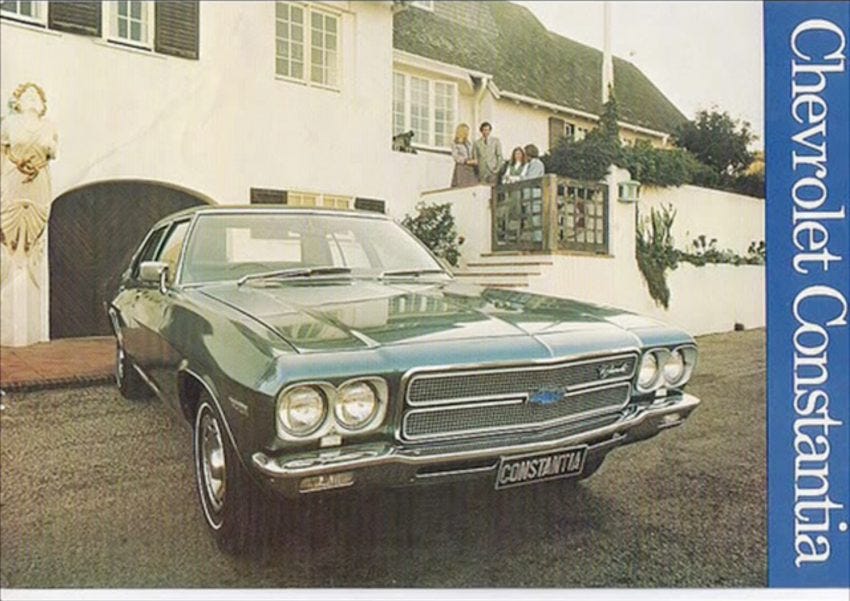
Church advocates desperately wanted General Motors to leave South Africa. It would have been a complete and total loss for the firm and its shareholders, but, to activists, South Africa had a tragic flaw - systemic racism codified in laws known as Apartheid.
Apartheid was how the white minority in South Africa kept the Black majority in a permanent state of subservience. It was a separation of races so severe that it somehow made segregation in Alabama almost look progressive.
Millions of black families had been forcibly removed from their homes in what became “all-white” cities. Stripped of their birthright citizenship, “nonwhites” were herded into reservations that the government considered separate nations. Productive land was reserved for whites, the rest left for everyone else to scratch out an existence. Eighty percent of the country’s people had been corralled into just ten percent of its territory. Overcrowding meant whatever soil could be harvested was soon overworked and infertile. Starvation and malnourishment were the norm.
General Motors didn’t invent Apartheid, but it sold vehicles to the massive police state that ruthlessly enforced it. “Special Branch” police officers patrolled white cities in white vans to round up stray blacks with expired work visas. Half a million Africans were jailed each year for so-called “passbook” violations. Many were beaten, tortured, or killed. Some were sold to white farmers as forced laborers. Apartheid had effectively made it illegal to be black in an African nation.
Activists saw General Motors as a great white whale. Convincing the world's largest company to leave would send a strong signal to the international business community. Ford and Chrysler would likely follow, and, eventually, all American companies would be forced to answer why they operated in a country that treated people like animals. Each departure would be a headline. Headlines kept Apartheid in the national conversation.
If enough companies left, white South Africans would inevitably feel the pain of Apartheid. Lost jobs. Products missing from shelves. Public works defunded. It would only be a matter of time before local voters passed that pain on to the ruling National Party. So long as white citizens were oblivious to the agony of the black existence under Apartheid, the status quo would only strengthen - as it had for more than thirty years.
Americans witnessed the brutality of the Apartheid regime in 1960 when police opened fire on unarmed protestors in Sharpeville, a black ghetto near all white Johannesburg. As many as ninety were murdered, including 10 kids. Hundreds of defenseless men, women, and children were wounded. Photographers captured grizzly images of the Sharpeville Massacre that were broadcast on the evening news around the world.
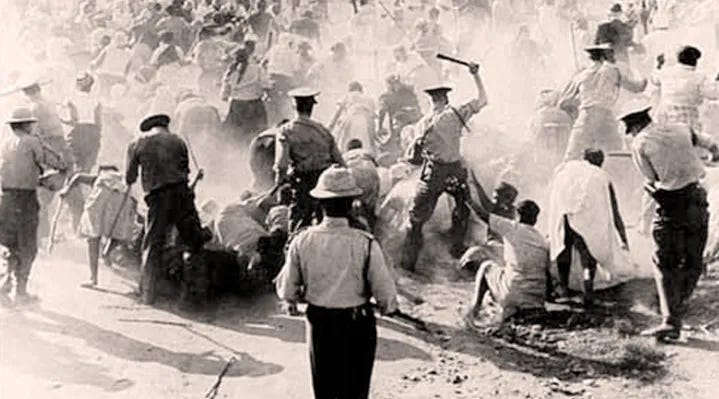
South Africa was expelled from the British Commonwealth. The United Nations adopted a resolution “deploring the policies and actions of the South African government.” Massive public outcry forced the U.S. and U.K. to discontinue arms deals with the white nationalist government. Hundreds of millions of dollars in foreign investments left the beleaguered nation, nearly crashing its stock market.
Not everybody was so principled. Several American corporations doubled down, including GM, Ford, and IBM. Some placed full-page ads in local papers professing continued support for the Apartheid regime. A consortium of U.S. banks gave the pariah government a revolving credit to withstand blowback from a possible “second Sharpeville.”
As Tim Smith had written in a letter to church leaders, “At a time in which political and economic instability was leading to a type of re-evaluation, the natural inclination of profit-motivated U.S. businessmen was to stabilize the economy.”
Leaders of the opposition African National Congress had a policy of peaceful protests, but the massacre spawned a militant wing led by a freedom fighter who had marched with protesters in Sharpeville named Nelson Mandela. “The Spear of the Nation” began a campaign of sabotage that included explosions in public spaces and the mining of strategic roads. These “acts of terrorism” emboldened the National Party to crack down.
By the time of the annual meeting for General Motors in 1971, Mandela had already been in prison for eight years.
Sharpeville eventually faded from the headlines in America. Most people moved on to the next news cycle, but anti-apartheid activists pressed on. If nothing was done to pressure the ruling party to negotiate, South Africa would likely devolve into a bloody civil war. As the international backlash to the massacre showed, outside pressure could weaken the white nationalist party. But so long as foreign corporations remained, the Apartheid state would recover - and emerge stronger.
Tim Smith and other church activists had met with the Chief Executive Officer of General Motors before the shareholder meeting. Thomas Murphy was a devout Catholic known to travel for hours to reach the nearest Sunday mass on business trips. However, the mass starvations and infants dying of malnutrition failed to persuade him.
They then pitched the executive on the halo effect for the brand’s reputation. Progressives would be more likely to buy their cars. College graduates, many of whom had protested Apartheid, would be more likely to work for General Motors.
“I just can’t do it, Tim.” Murphy’s hands were tied. He couldn’t justify a fire sale to shareholders. They had elected him to maximize profits - not to preach.
Murphy assured church advocates that Apartheid was “economically unrealistic.” There simply weren’t enough white workers to fuel growth over the long term. Soon enough there would be more opportunities for nonwhites to qualify for better paying jobs. General Motors was already paying them more than minimum wage. It was better for blacks to work for enlightened American managers than racist South Africans, he argued.
Divestment at the level anti-apartheid activists wanted would leave thousands of hard-working men unemployed -- creating more hardship for the same people they wished to help. Smith took solace in the words of a leader in the exiled African National Congress: “Economic boycott of South Africa will entail un-doubted hardship for Africans... But if it is a method which shortens the day of bloodshed, the suffering to us will be a price we are willing to pay."
GM had a history of supporting white supremacist governments. Its German subsidiary had produced the “GM Krieg” that made possible the Nazi blitzkrieg of Poland in 1939. When the full extent of GM’s support for the Nazis surfaced after the war, the chief executive officer at the time successfully waved away criticism saying the partnership had been “highly profitable.”
Church activists understood the profit motive. Investing in growth was essential for survival in highly competitive markets like auto manufacturing. But just because something was profitable didn’t mean a company could get away with accessory to murder. Murphy seemed to say his only job was to maximize profits for shareholders, even if it meant making a deal with the devil.
Moral persuasion had failed. Ethics and values were found wanting. Convincing corporate America to leave South Africa would require a significantly broader effort. Within the faith community, many agreed more evidence was needed to justify their extraordinary demands, including on-the-ground intelligence from inside the factories in South Africa. Tim Smith responded.
Read about Tim Smith’s encounter with “Secret Police” in South Africa and his history-making campaign that revolutionized the global economy for good in Part II of the Godfathers.
I was surprised to read that Tim is 6 ft tall - he always appears to me a total giant - 6' 4" at least!