
The American Who Became a Dictator’s Assassin
A car bomb on Embassy Row was considered a foreign affair in 1976. Fifty years later, I discovered the most American story never told.

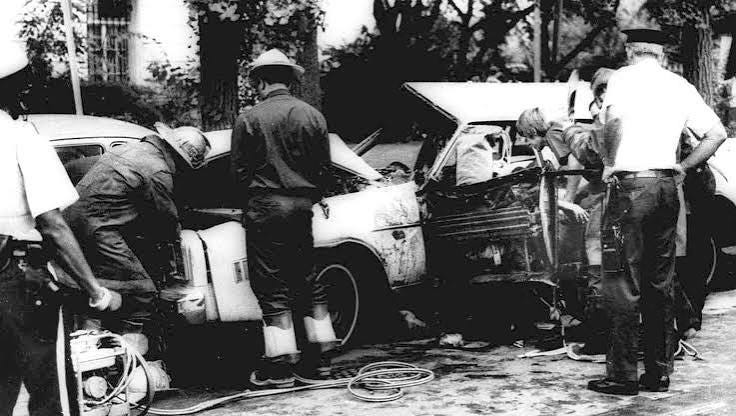
A car bomb detonated just a mile from the White House nearly fifty years ago. Federal agents arrived to find the bodies former Chilean ambassador to the United States, Orlando Letelier, and his twenty-five-year-old American colleague Ronni Moffitt. Democrats blamed their deaths on the right-wing Chilean military junta, while Republicans claimed it was a false flag event by leftist radicals.
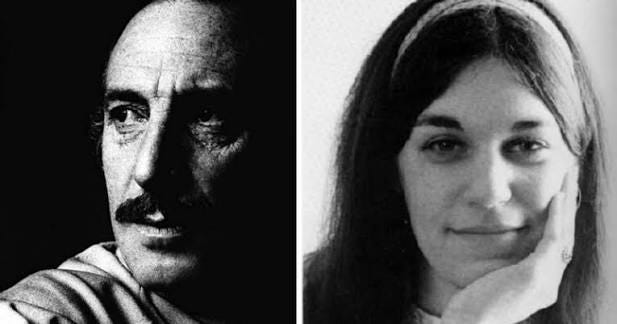
Assistant U.S. Attorney Eugene Propper and hundreds of FBI agents set out to find the truth in a labyrinthine manhunt that ended eighteen months later with a discovery nobody expected—the man who made and planted the homemade bomb wasn’t a foreign national, it was an American born in Iowa named Michael Vernon Townley.
What kept me up at night about this story was: How did a kid from suburban Iowa wind up planting a car bomb for a foreign dictator?
I’m not a historian or a true crime podcaster. I am a Chilean American writer who arrived at this story at the literal intersection of what fascists call “blood and soil.”
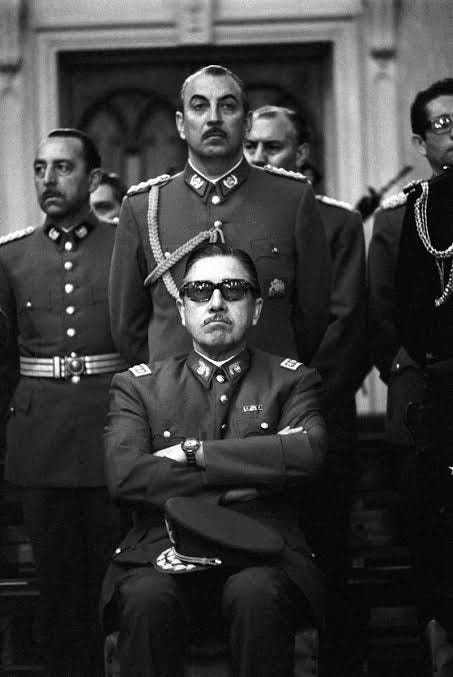
I was born in California, but my mother moved us to Chile in 1981 where she was born. We arrived at the height of General Augusto Pinochet’s iron grip on Chile.
I vividly remember soldiers on the streets of Santiago toting machine guns and being told by my stepfather not to stare at them. There were always stories swirling about suspected communists being taken by masked men in unmarked vans, joining the thousands of “disappeared.”
Most of my family happened to support the military junta and were thankful to have order restored and low crime after three chaotic years under the democratically elected government of the Marxist Salvador Allende. What we didn’t know at the time was how much of that chaos was caused by global forces outside of Chile.
We moved back to Los Angeles a few years later, but returned to Chile a dozen times throughout my childhood. I was raised belonging to two countries, two cultures, and two histories.
Roots in North and South America gave me a profound perspective of what it means to be “American.” That feeling, of being from two places on the opposite sides of the planet, and never fully at home in either, has defined my personal identity.
That duality has led to a lifelong fascination with the connections between my two nations. Over decades, I devoured everything on their shared history because understanding it was a way to understand myself.
In all that reading, I discovered Peter Kornbluh’s The Pinochet File, an eye-opening account of declassified documents that showed how Nixon and Kissinger created the atmosphere for the military coup that ended in the overthrow of the democratically elected government of the Marxist Salvador Allende, and the seventeen-year military junta that followed. That sordid tale of Cold War espionage climaxed in Townley’s bombing on Embassy Row.
The more I learned about Townley, the more similarities I found between us. A childhood moving back and forth between two countries is a rootless existence; it means speaking two languages and being two different people. It means having to fit in where nobody totally accepts you, and never being able to honestly answer the simple question: Where are you from?
Finding my reflection in an assassin was uncomfortable and unwelcome, but rather than look away, I leaned in.
As I went deeper trying to understand how a kid from Iowa became an international assassin, the last thing I expected to find at the center of the conspiracy was—a love story.
Behind the sordid story that ended in the death of two innocent people was a complicated marriage that began with an eighteen-year-old Michael Townley and a thirty-year-old woman on her second divorce with two kids.
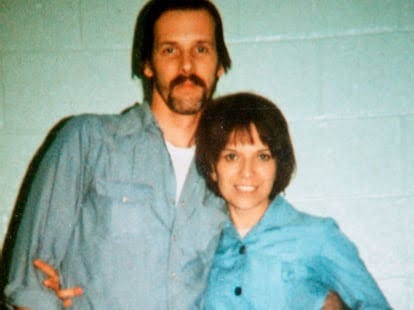
What started as a curiosity turned into an obsession. History knew Michael Vernon Townley, but what about Mike? He wasn’t born an assassin. Even criminals are still human beings and products of their environment. I felt a deep and uncomfortable empathy for the man behind the assassin that made me feel like I could write his story in a way that no one else could.
As I tinkered with an outline, I hit a wall. I was in the process of making a deeply flawed and dangerous man relatable and it was creeping me out. Having lived in Chile I understood that his crimes strike at the heart of the political scares that have haunted the nation for more than fifty years. So, even after months of research, I shelved the story.
Six months later, after finishing another project, I returned to the story with a new perspective. Our current culture seems to demand that we reduce historical figures to cardboard cutouts of good and evil. But if we dismiss them as merely monsters, we learn nothing. If we examine how a normal, displaced American boy can be incrementally warped into an unrepentant killer, we unlock a terrifying truth — any of us can be hacked. My discomfort was exactly why I needed to finish the story.
As I fleshed out a new outline, I needed to understand the other side of the bomb. The victim, Orlando Letelier.
I contacted his eldest of four sons through a family connection and over hours of conversations, the chapters based on Orlando’s life multiplied until he became half the story.
Orlando was a man of destiny. He knew his life was in mortal danger but remained determined to find justice at any cost.
The world today needs more men like Orlando Letelier. He was so formidable that General Pinochet was willing to spark a geo-political crisis with a brazen act of international terrorism on the soil of his most important ally in the Cold War.
I also learned that the Leteliers weren’t just Chilean; in important ways they were even more American than the Townleys. Orlando was living the American Dream in Bethesda for ten years where his fourth son was born and where they all attended public schools and universities.
I wasn’t writing a story about Chile, I was writing about the United States. A piece of our own history that we disregarded as someone else’s problem.
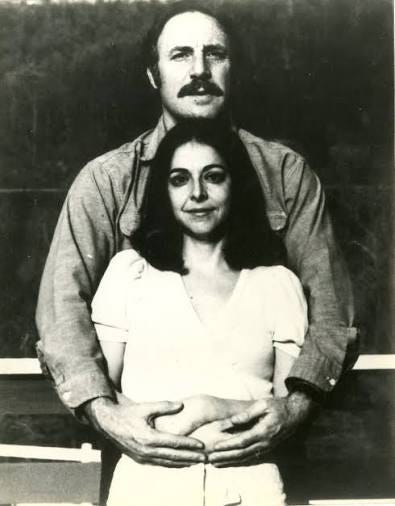
My story presented a paradox: the born-and-bred Iowa boy rejected democratic ideals to build bombs for a fascist dictator, while this exiled Chilean family lived, breathed, and ultimately bled for the principles Americans are supposed to champion.
So yes, it was the assassin that drew me, but it was the victim that convinced me to finish writing.
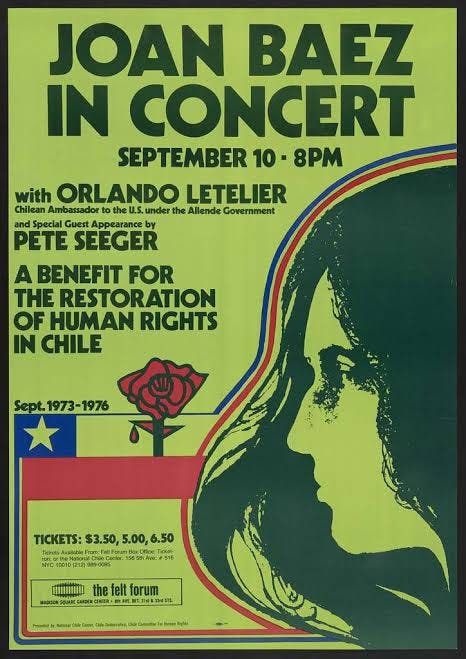
Around the bombing swirled characters you may recognize: Nixon, Ford, and Kissinger. Pinochet and Allende. Bob Dylan, Pete Seeger, and Joan Baez; the playwright Arthur Miller and the poet Pablo Neruda. And while these historical figures got most of the attention, it was Michael and Orlando who were on the front lines making history.
Excellent books have been written about the legal trials around the bombing and the Cold War complicity of the Nixon administration, but with so much complexity, standard historical nonfiction rarely has room for the terrifying intimacy of the people involved. We know what happened, where it happened, and how it happened, but not enough of the why. It was a door left wide open, and I had to walk through it in a way that could only be explored through creative nonfiction.
My book in progress is called The Technician. A technician is someone who obsesses over the wiring, the mechanics, and the execution of a task while totally divorcing themselves from its moral consequences. Only by writing the story as creative nonfiction can we understand that the bombing is a proxy for how modern atrocities happen, not through cartoon villainy, but through cold, detached optimization.
The Technician is the fullest expression of why I created Walk A Mile: to step into the shoes of controversial people. In this case, not to rationalize their crimes, but to confront the uncomfortable reality of how they became who they are. Because, if not for God’s grace, it could have been any of us.
The story is as relevant as ever. Strongmen are in vogue, and a dangerous fear has returned that makes ordinary people wonder what cherished rights they might trade for a little “order.” The Technician will show how easily a democracy fractures and how painful it is to rebuild.
As the fiftieth anniversary of the bombing on Embassy Row approaches this September 21, I’m far from finished with the story (and I don’t know how or if it will be published). But I feel a need to share what I have discovered along the way, because, as with anything well-researched, The Technician is a window into history, and, more specifically, an interrogation of what it really means to be an “American.”
I hope you’ll come along for the ride.
It is a shame that a book related to such horrible crime will be written under the tremendous political bias of the author, most likely to become a pamphlet. In this writing, Ryon exposes the narrow view that the left has about the tragic events that followed the government of Allende. He is right when he says that the chaos during the Allende era was caused by global forces outside of Chile, but he fails to correctly identify them all. He talks about Nixon, Ford, and Kissinger but he fails to mention the influence of the apparatchiks of the Soviet Union, “our big brother” the way Allende referred to that dictatorial regime; or the influence of the Castro dictatorship in Allende´s government, filling with Cuban “advisors” all the top level government offices, to the point that one of those advisors got married with one of Allende´s daughters. The fact that Allende was democratically elected does not mean that his government was democratic. Noriega in Nicaragua, Maduro in Venezuela were also democratically elected.
He also talks about Chile in the 80´s. He says he was afraid of the soldiers toting machine guns, when their number was far less than the ones you see today in an American or European airports. He talks about the thousands being “disappeared”, even though there were hardly any disappears in the 80’s, even though, counting the 18 years of military government, you cannot use the term thousands to refer to the number of disappeared.
Many deplorable events happened during the tragic period, being the assassination of Mr. Letelier one of many, but if you want to have credibility, at least try to have your facts right.