
How Federal Investigators Helped Topple a Dictator Abroad (2)
Intrepid prosecutors and the FBI broke the Letelier case and sparked an International crises when they ordered the extradition of the conspirators from Chile. What came next made history...

Author’s Note: Special thanks to Peter Kornbluh, author of The Pinochet Files, for pointing out that I had the incorrect image for the FBI “Chilbom” cable in my last post (Part 1). He would know, being among those most responsible for declassifying documents that exposed the CIA’s involvement in Chile and the Letelier assassination.
In the spring of 1978, almost two years after the Letelier assassination, Assistant U.S. Attorney Eugene Propper landed in Santiago in an effort to interview Michael Townley and the other conspirators. A crowd of reporters waited for the attorney at the airport and Chilean television broadcast the arrival of the prosecutor. Crowds waved as “el fiscal” passed through the city.
He was a federal prosecutor from the United States lacking jurisdiction and carrying no authority to compel cooperation, but he saw leverage in that everyone in Santiago now knew who he was and what he was after.
An odd arrangement was made allowing American investigators to submit questions to Chilean officials through the country’s own military prosecutor. It allowed the regime of General Augusto Pinochet to stage its own “investigation.” What Eugene Propper had in his favor was that the crime had been committed on American soil by an American citizen.
Armando Fernandez, a member of the Chilean intelligence agency (DINA), who had spied on Orlando Letelier in Washington, later swore that he gave truthful accounts of his mission to the military prosecutor but was handed a fabricated script by commanding officers instead.
Michael Townley spent those two weeks holed up in a water tower near his home in Santiago, moving just in time whenever investigators arrived based on tips from the military junta.
When Pinochet stonewalled Propper’s investigation and refused to produce the wanted men, Deputy Secretary of State Warren Christopher threatened to withdraw the U.S. ambassador from Santiago. General Pinochet finally relented and “expelled” Michael Townley for “violating regulations concerning the residence of foreigners.”
In the end, despite his faithful service, Townley was expendable and not even Chilean. After the expulsion, General Contreras immediately got to work spreading rumors that el gringo was actually working for the CIA.
Once in FBI custody, Townley cooperated and negotiated a plea deal. He walked investigators step-by-step through the mechanics of the plot and even recreated the bomb. He confessed to have been ordered to eliminate Orlando Letelier on instructions from DINA director Manuel Contreras, via Colonel Pedro Espinoza.
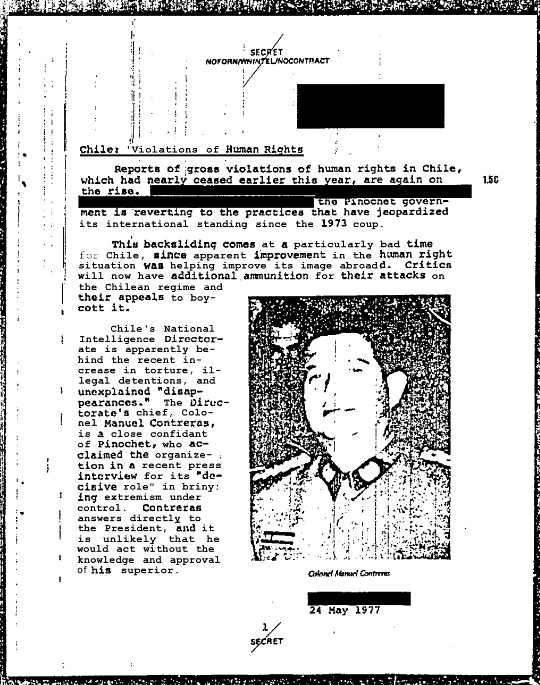
Armando Fernandez had been dispatched beforehand to conduct surveillance. Townley built and planted the bomb, but he could not be around when it exploded for fear it would implicate Chile. A couple of men from a Cuban anti-Castro group had pushed the button.
What Townley would not confess was that the assassination had been ordered by Augusto Pinochet. Despite being discarded like a foreigner, he remained loyal to his general. Still, Townley reported to Espinoza, Espinoza to Contreras, and everyone knew Contreras reported directly to Pinochet.
Prosecutors now knew the men who did it, but they did not have evidence against their ever-elusive target: the man who originated the hit. A head of state and an ally in the Cold War was a hard man to extradite, especially without direct evidence, but the investigators had a mandate to follow the truth wherever it led.
Based largely on Townley's confession, a federal grand jury indicted eight men: Contreras, Espinoza, Fernandez, and five Cuban operatives. Townley, already cooperating, was charged separately and pleaded guilty as part of an agreement to be placed in witness protection after prison.
Pinochet had handed over Townley to protect the regime and now the whole world knew the names of the perpetrators that ultimately led directly to him.
The United States formally demanded the extradition of the three indicted Chilean officers. In 1979, Chile’s Supreme Court, under Pinochet’s thumb, refused the request and claimed insufficient evidence to even investigate the crimes.
Then-Secretary of State Cyrus Vance declared it unacceptable that “high officials of a foreign government have been directly implicated in murders committed on United States territory.” President Jimmy Carter retaliated by cutting off Export-Import Bank credits, by excluding Chile from naval exercises, and by reducing the American military mission there. The intrepid work of the federal investigators was impacting national policy.
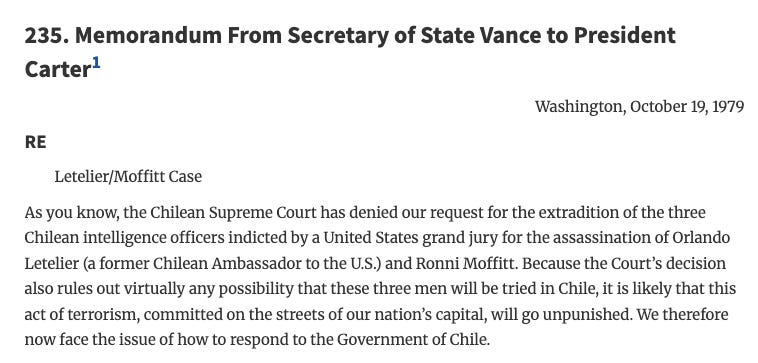
America had a formal grievance attached to a specific act of state terrorism on its own soil. Even as the incoming Reagan administration initially softened its stance toward Pinochet —viewing him as a necessary anti-communist bulwark—the outstanding indictments in the Letelier case remained an open wound between the United States and Chile.
Despite the tension, years went by without the extradition of the three wanted Chilean officers. By the mid-eighties Chilean civil society was reviving and mass protests against the brutality of the Pinochet regime were erupting. In addition to thousands of dead and “disappeared,” it was an open secret that Pinochet had ordered the assassination of Orlando Letelier.
As the Soviet Union began to crumble, U.S. officials began to view Pinochet less as an ally and more as a liability.
It took another nine years for prosecutors to get their next big break. By 1987, Armando Fernandez was in contact with the American Embassy in Chile. The following year there would be a plebiscite for the country to choose democracy or to continue the dictatorship, and Fernandez was ready to jump ship to avoid future repercussions.
In exchange for protection from the FBI, Fernandez was ready to tell the whole story about the Letelier case, and, importantly, about where the order for the assassination had originated.
On a signal from his lawyer, Fernandez bought his own ticket to Brazil as if he were going on vacation and flew out of Chile on his national identity card. In a safe house in Rio de Janeiro, polygraphers spent three days testing his story before he was smuggled to Washington. Pinochet’s regime answered with a warrant for desertion, its only legal action issued in the Letelier case.
Fernandez pleaded guilty to being an accessory to murder, and testified that he had heard that General Contreras had said the Letelier assassination was ordered by “the Chief,” meaning Augusto Pinochet. It was hearsay upon hearsay, but the closest prosecutors had gotten to connecting the assassination to the dictator himself.
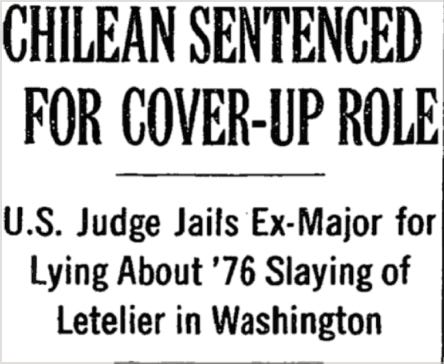
In exchange, Fernandez got roughly five months in prison and lived as a free man in witness protection. As part of the deal, the United States promised in writing that it would not deport him to Chile nor cooperate in his extradition. His information was deemed "of limited value" but "the foreign policy benefits are substantial." Prosecutors had successfully protected a perpetrator of the crime in exchange for evidence against Pinochet in the name of statecraft.
In part based on that testimony, then-Secretary of State George Shultz requested a CIA review. Based on that report, Shultz wrote to President Reagan that there was “convincing evidence that President Pinochet personally ordered his intelligence chief to carry out the murders… in a blatant example of a chief of state's direct involvement in state terrorism.”
The United States government soon put its diplomatic weight behind the complete democratization of Chile. Congress wrote the case into law, conditioning any renewed aid on progress toward justice in the Letelier-Moffitt murders.
Around that time, the Letelier assassination and Fernandez’s defection also caused fractures within the Chilean military, severely damaging Pinochet’s reputation among his own officers who had felt betrayed by the regime’s lies.
When the time came for the yes-or-no plebiscite on the continued rule of Augusto Pinochet, polling showed the “No” campaign pulling ahead.
U.S. intelligence uncovered that Pinochet planned to use mass violence to halt the election and retain power. But the plot collapsed when his own officers, having lost patience with the regime and under intense international scrutiny, including from the Letelier affair, refused to carry out the slaughter and allowed the vote to finish peacefully.
On October 5, 1988, just two weeks after the twelfth anniversary of Letelier’s assassination, the people of Chile chose democracy over Pinochet. After seventeen years of totalitarian dictatorship, the country peacefully transitioned back to democracy.
A newly democratic Chilean justice system convicted retired-General Manuel Contreras and Colonel Pedro Espinoza for the Letelier murders in 1993. Contreras initially received a seven year sentence, but the convictions continued for the rest of his life with more than five hundred years in all. He died in prison in 2015, never stripped of his rank.
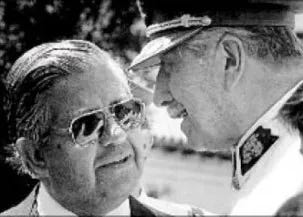
Espinoza is still in jail today and, at 93-years-old, got his sentence extended for the murder of Ronni Moffitt in June 2026, almost fifty years after the assassination. For his multiple human rights trials, Espinoza got a cumulative sentence of over two hundred years.
The verdicts in Chile delivered justice based on the FBI’s tireless work. And the convictions confirmed that Fernandez had successfully escaped justice in Chile where he would have met a similar fate.
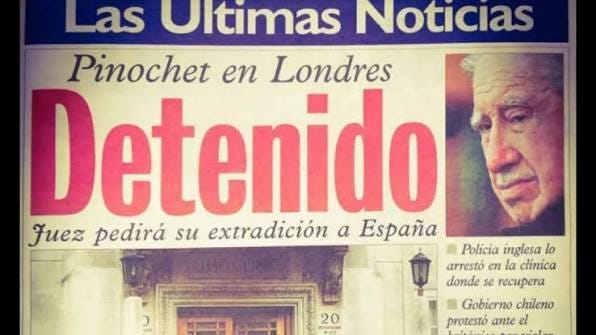
Augusto Pinochet was eventually stripped of his immunity and faced multiple indictments for tax evasion and hundreds of charges for human rights abuses, but before he could be convicted, under indictment to the end, he died at ninety-one-years-old.
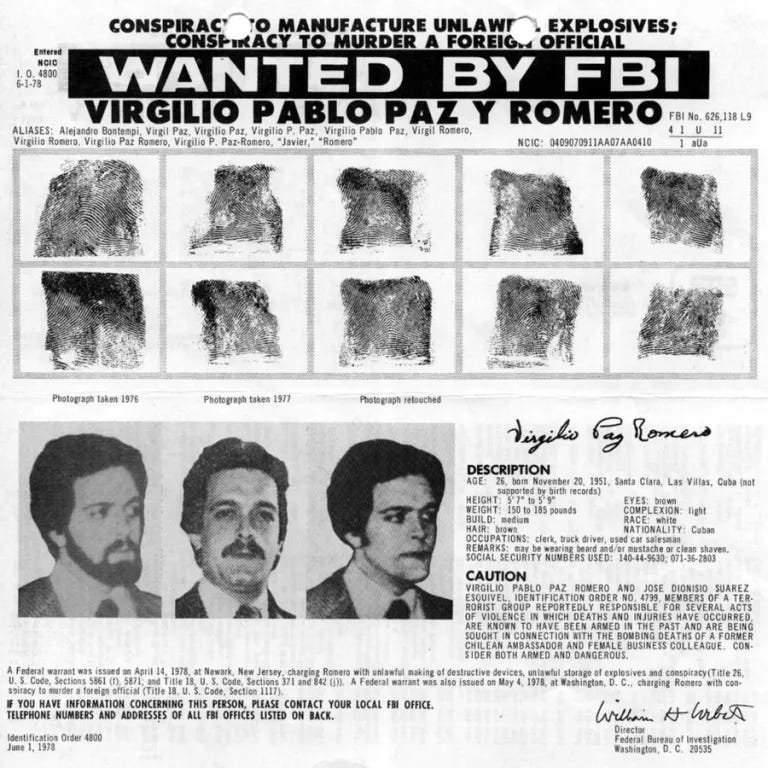
The two Cuban exiles who detonated the bomb that killed Letelier, Virgilio Paz Romero and Dionisio Suarez Esquivel, went into hiding, but were captured in the early nineties. Both ultimately pleaded guilty to their roles in the assassination.
While Michael Townley, the man who built and planted the bomb, was released after roughly five years in prison.
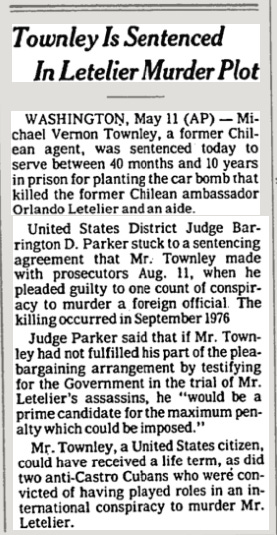
Orlando Letelier didn’t live to see his beloved homeland free again, but his fearless pursuit of justice that led to his death on Embassy Row sparked an equally relentless pursuit by federal investigators. Prosecutors and the FBI followed the evidence to the top and did their part to topple Pinochet. In that sense, Orlando Letelier would have found some justice.
Post Note: If you’re interested in the CIA’s clandestine operations in Latin America, read The Pinochet Files by Peter Kornbluh, and the eye-opening declassified documents uncovered by the National Security Archive.