
Michael Townley Started a Revolution For His Wife (1)
How an American raised in suburban Iowa became one of the most lethal assets of a paramilitary group dedicated to overthrowing a Marxist government.

Author’s Note: A thoughtful reader left a comment about how my stories so far were politically biased, which is accurate, because I write creative nonfiction from the perspective of controversial people. Now it’s time to tell the side of the story that’s rarely told anymore.
In the fall of 1969, Michael Townley was a transmission mechanic at an AAMCO station in Little Havana. He had tried selling encyclopedias and then mutual funds, which turned out to be a fraud.
At least he was working with his hands again, the only real talent he had since he dropped out of high school.
He also liked his Cuban co-workers, even if they spent most of the workday bitching about Fidel Castro. Some of them supposedly had connections to anti-Castro heavies who fought in the Bay of Pigs.
Mike wasn’t much into politics, but his wife never liked those Cubans. Mariana thought their “tropical temperaments” made them loud and obnoxious. She called them fascists and anti-Semitic, which she despised because her first husband, the father of her eldest, was Jewish.
But worse than that, she considered them cowards, constantly talking big about how they would hurt Castro from the comfort of Miami like “dogs barking behind a fence.”
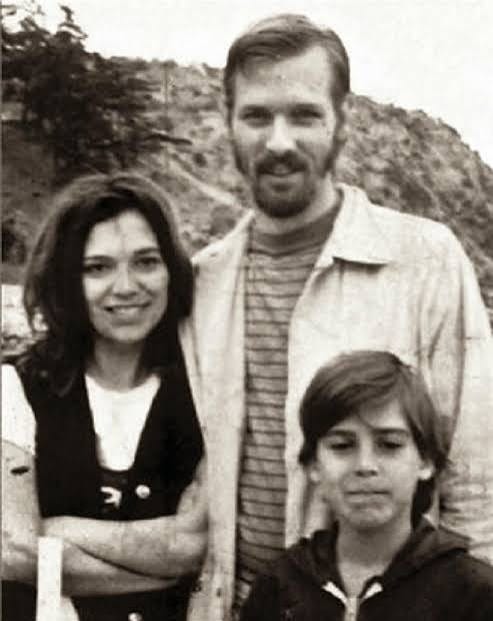
Mariana had been unhappy since they arrived. Miami was sleepy compared to New York, where she had lived with her second husband. She was also sick of doing her own domestic chores and missed having a full-time nanny like most families in her home country of Chile.
She had dreamed of a big life traveling the world with interesting people. Now she was married to a common auto mechanic in a tiny apartment, raising four kids a million miles from her family.
She kept close tabs on the politics in Chile because there was a communist running for president. Salvador Allende had campaigned before, but this time everyone agreed things were so bad that he might actually win.
Mariana had been a socialist most of her life, but the idea that the country she loved could become another Cuba was unbearable.
That fall, on election night in Chile, Mike and Mariana were glued to their radios, anxiously awaiting the results of the hotly contested election. It had come down to a three-way runoff and if one candidate didn’t get a majority, congress would have to choose the winner.
Poll numbers rolled in, and by the end of the night, it seemed like even with only thirty-six percent of the vote—the most of the three candidates—he’d have enough to form a coalition government.
Salvador Allende would be the next President of Chile.
Mariana wept for the first time in front of her husband. She told him that she was moving back to Chile with the kids, with or without him. She couldn’t sit around Miami like those Cubans and do nothing while her country fell to ruins.
Mike pushed back, asking if maybe it wasn’t such a good idea for the kids to be in a chaotic environment. He had earned some points as a decent stepdad to her kids and felt like he should have a voice in the matter.
Mariana wasn’t having it; she had to “do something.”
Mike was born in Iowa but moved to South America as an adolescent when his father became the head of Ford Motor Company in Chile. Vernon Townley was said to also work as an informant for the CIA, keeping tabs on the country’s rising communist influence.
Despite Mike’s rebelliousness and lack of a diploma, the young man was hungry to matter like his father, and to be the man his wife wanted.
Before he left for Chile, he contacted a local CIA office to offer his services. He knew Nixon would do whatever was necessary to stop Allende. He was told they would consider it.
Mike packed up the house and met Mariana and the kids in Santiago.
He spent as much time as possible at the American Embassy, where they joked he was like a “barnacle.” With enough exposure there, he hoped to finally land a job as a paid informant. As declassified documents later showed, the Agency eventually “canceled its interest in him as an agent.”
Meanwhile, Mariana had been busy making contacts with the people most likely to actually topple Allende. She visited the headquarters of Patria y Libertad (Fatherland & Liberty), an arch-conservative paramilitary movement that modeled itself, without apology, on fascist street gangs in Nazi Germany.
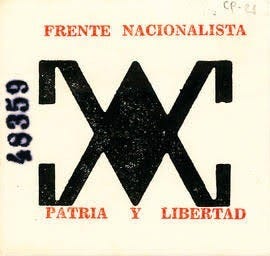
She wasn’t necessarily fond of the group’s politics—it was a little out there—but she introduced Mike to her new contacts. She said he was good with his hands and an expert in electronics, which was true. He would be a useful agent, she added, but the group’s leaders believed the tall, blond, blue-eyed gringo with the funny accent was probably also working for the CIA.
Even if the United States was on their side, and it was, should things go too far they didn’t want a mole relaying that information.
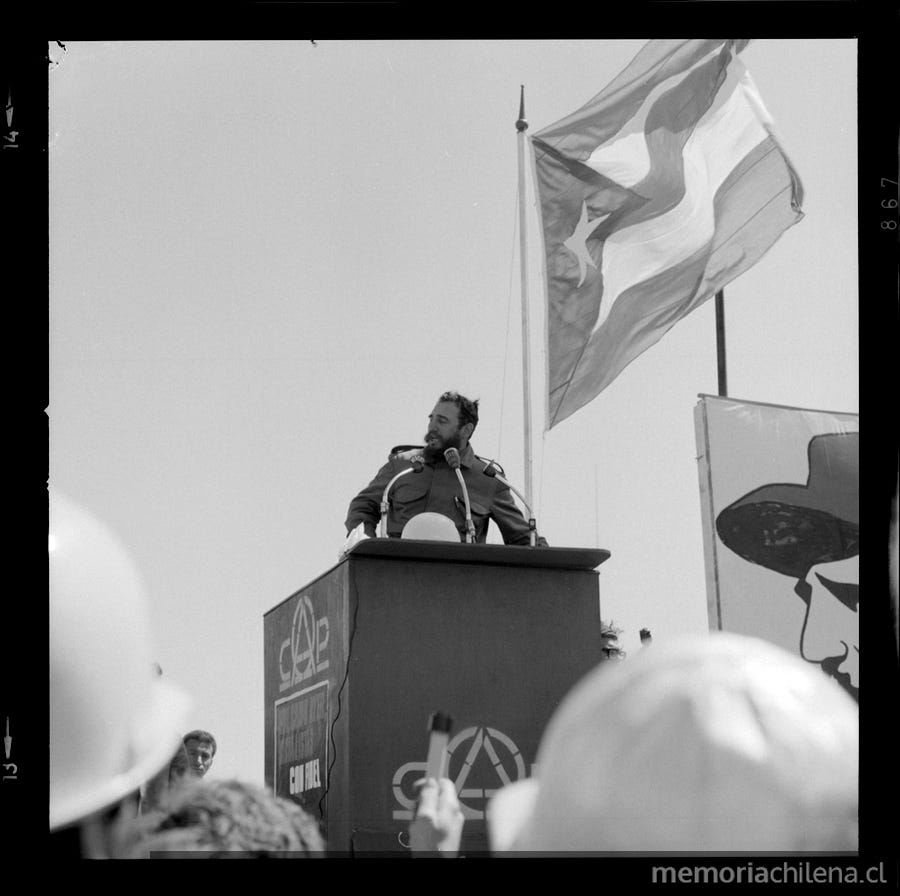
In the fall of 1971, when Allende welcomed his good friend and ally, Fidel Castro, the opposition flew into a tizzy. Castro was supposed to stay in Chile a few days, but ended up traveling the country for nearly a month, giving fiery speeches about revolutionary unity and the need to nationalize private property to packed stadiums, universities, copper mines, and factories.
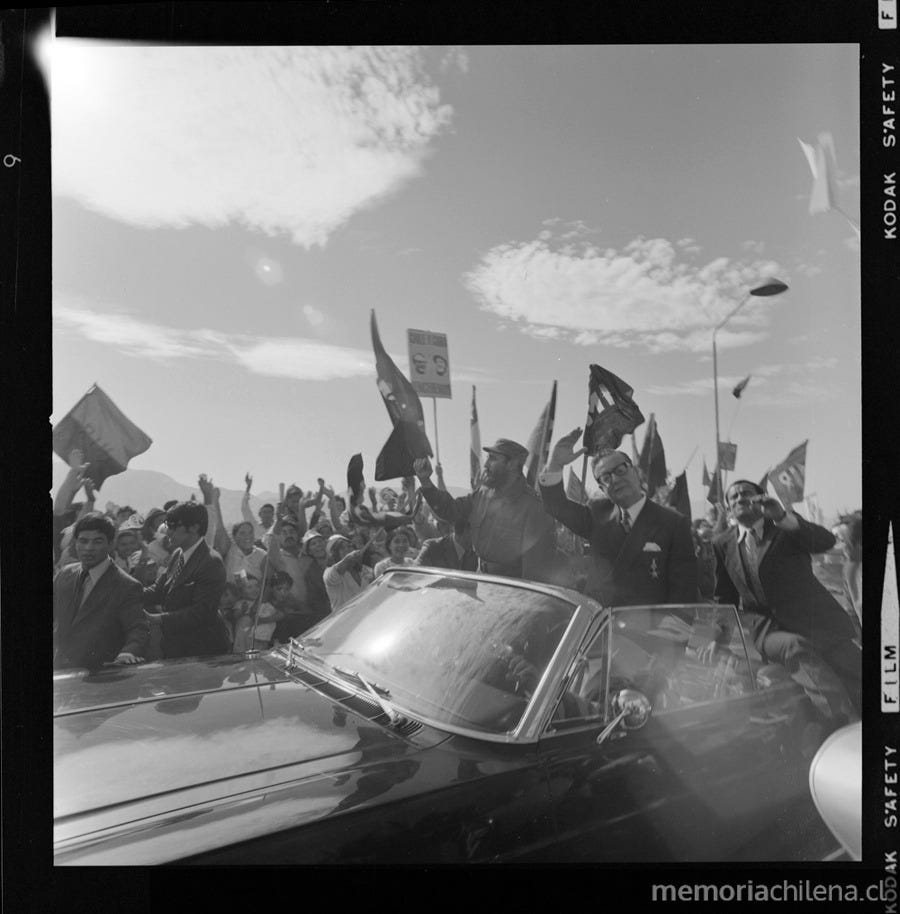
It didn’t help the backlash that Allende’s own allies on the far left had already called for a permanent socialist government. For millions of Chileans like the Townleys, Castro was surveying his future conquest. What many had once dismissed as Cold War paranoia suddenly felt like prophecy.
Not long after, the conservative Supreme Court accused Allende of creating a constitutional crisis. In a series of high-profile cases, farmers, native Mapuche, and political agitators had seized lands that belonged to wealthy landowners. When the court ordered them to vacate, Allende apparently stopped the local police from forcibly removing the squatters.
Concerns mounted that private property would no longer be protected.
Mike and Mariana, along with millions of Chileans, genuinely believed that their country was months away from becoming Cuba, that their children would grow up in a dead-end dictatorship, and that everything they had worked so hard for would be seized by the government. Doing nothing was looking more and more like apathy—even cowardice.
For his part, Mike had finally found a purpose. He had failed at school and at business, but he had an opportunity to help save his adopted country and finally be someone that mattered and the man his wife desired. When he heard rumors that Patria y Libertad was backed by the CIA, it confirmed that he was on the right side of history.
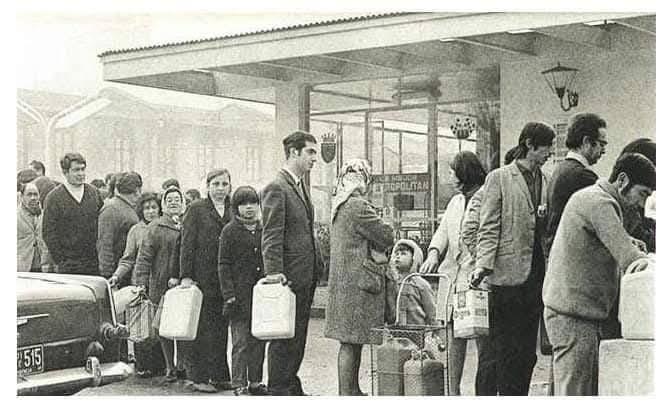
Allende’s overreaching socialist policies, along with interference by the CIA, resulted in inflation that climbed a hundred and sixty percent in 1972, and with it arrived constant social unrest. People had had enough with the breadlines and buying food in a black market that was driving up prices.
Union workers began protesting the government all over the country, culminating in a truckers’ strike that paralyzed commerce for weeks on end.
Even before the strikes, with food dwindling to feed their families, women from middle- and upper-class neighborhoods had gathered in Santiago to bang their empty pots in protest. Thousands marched but the peaceful event escalated to violence when protestors were attacked by leftist counter-protestors, right-wing agitators, and pro-government police.
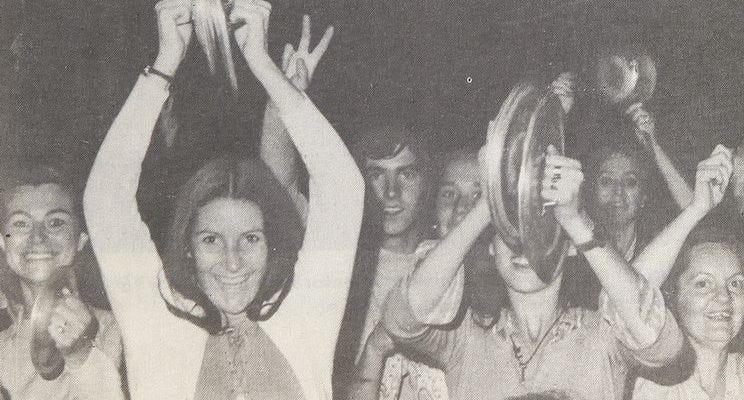
Augusto Pinochet, Allende’s commander of the Santiago garrison, declared a zone of emergency, banned the marches, and deployed the military with tear gas. Around a hundred were injured, including several gunshot wounds. Mike and Mariana witnessed an unarmed old man beaten to the ground by police.
To Mike and Mariana, that old man could have been them—it could have been anybody. It was beginning to feel like a civil war.
You’ll never believe what happens next in Part 2.