
A Secret Message Carved in Stone and Smuggled From the End of the World
Five small stones, secretly carved with a nail at the end of the world, told a political prisoner's family he was alive, defiant, and in mortal danger.

Author’s Note: The Technician is about Orlando Letelier and Michael Townley, but the choices they made didn’t just change history, they also impacted their families. Here is my interpretation of a real story told to me by Orlando’s eldest son, Cristian Letelier.
On the morning of September 11, 1973, Cristian Letelier was a teenager in Santiago, waking up from a night of pool and beers with his cousin. His father, Orlando Letelier, the Minister of Defense, shouted, “The chauffeur is here, but where’s my bodyguard?”
His mother, Isabel, told her husband that the bodyguard had called in sick.
When the phone rang, it was the President. Salvador Allende said that the military coup they’d feared was underway. Orlando offered to be by his side in the presidential palace, but Allende told him that a minister must be in his ministry “to the end.”
Orlando threw on a jacket and sped downtown to the Ministry of Defense, not knowing if he would ever come home—or survive the day.
A few months earlier, Cristian and his three brothers had been living on Embassy Row near the White House, playing high school football and living privileged lives. They had lived near Washington (the youngest was born in Maryland) for over a decade; and had a quaint family ranch near the Shenandoah River where they could escape to rest.
Now, standing on their balcony, the Leteliers could hear fighter jets roar overhead, dropping bombs on the presidential palace just a few blocks away.
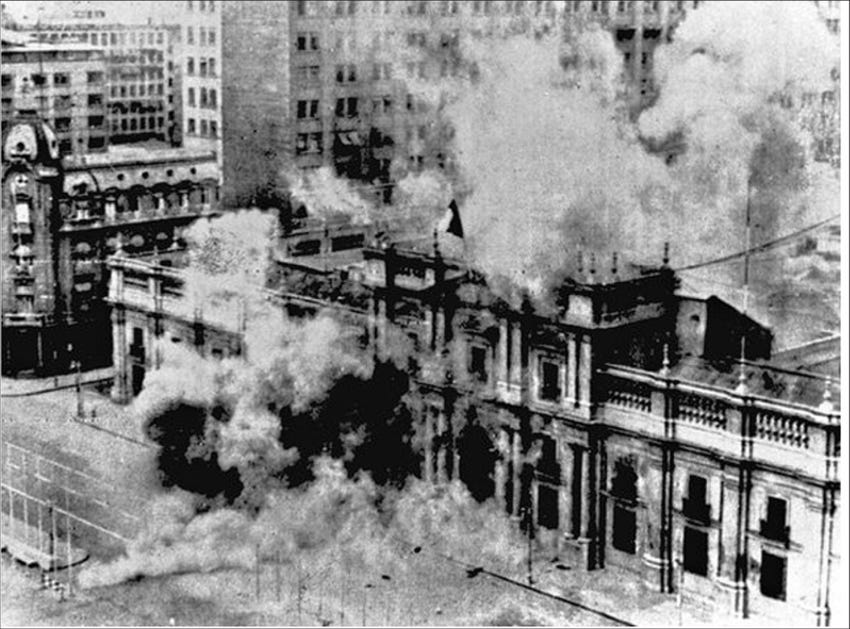
Radio reports said that the three branches of the military and the police had besieged the presidential palace and were pounding it with missiles and artillery. A spokesperson for the junta said that all government officials, including ministers, must turn themselves in to the Ministry of Defense by 4:30 PM or face “consequences easy to foresee.”
Then came President Allende’s final radio address thanking the people of Chile for the opportunity to be their President. He warned not to take up arms against the junta—the people must defend themselves, but they must not sacrifice themselves. Later that night, the Leteliers and the rest of Chile learned that Salvador Allende had taken his own life.
Isabel immediately took charge and must have called everyone she could to find out what had happened to her husband, but there were no answers. None of the other ministers’ wives knew where their husbands were, and it seemed like they had all been detained, or possibly worse.
The next day, Isabel marched to the Ministry of Defense with one of the other wives. Somehow they made it through the military barricade, likely because they knew all the soldiers, and snuck up the stairs to the fourth floor, where the two women confronted the leader of the junta, Augusto Pinochet.
“Where are our husbands?”
Pinochet said they could return the next day, but when they did, the general refused to look them in the eye and just shouted and blamed the military coup on Salvador Allende.
Not long after, Isabel Letelier was placed under house arrest.
Finally, the family got a tip from a soldier’s wife that Orlando was being held at the Military Academy—the same place where he had graduated high school. Then came months of agonizing silence.
Not long after the coup, Cristian and his brother Francisco were out on the balcony when soldiers started shelling a museum across the street. Some “freedom fighters” had holed up inside, and at one point, Cristian pulled his little brother to the ground as a stray bullet ricocheted above their heads.
More than once Cristian was pulled out of a public bus and asked to show his identification. When they realized his last name was Letelier, they’d pull him aside and make a few calls. Realizing he was just a kid, the soldiers would eventually release him.
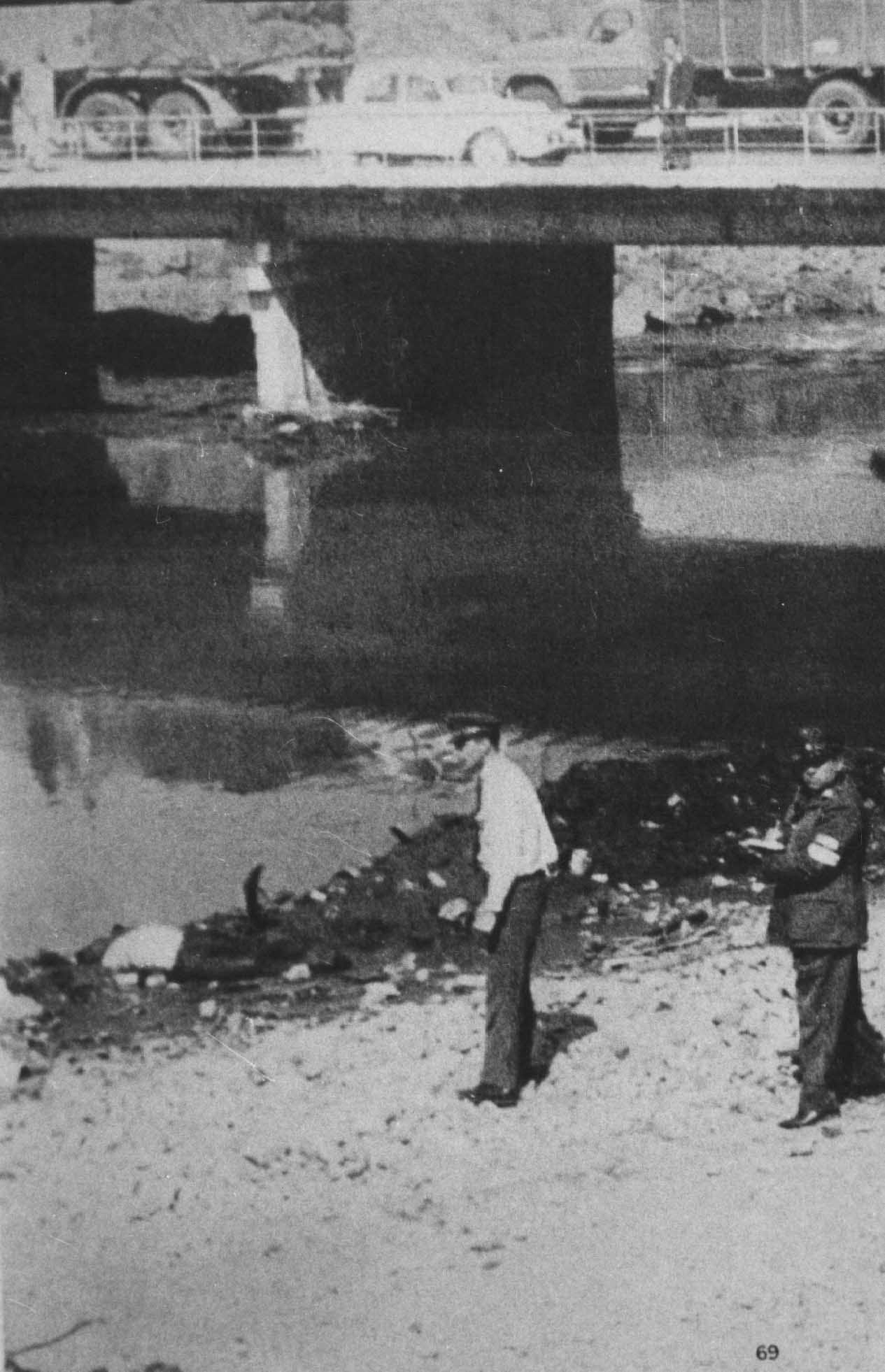
On the way to school one day, Cristian and his brothers crossed a bridge where they spotted dead bodies tossed on the banks of the river. “Birds were picking at their intestines.” Cristian told his younger brothers to look away.
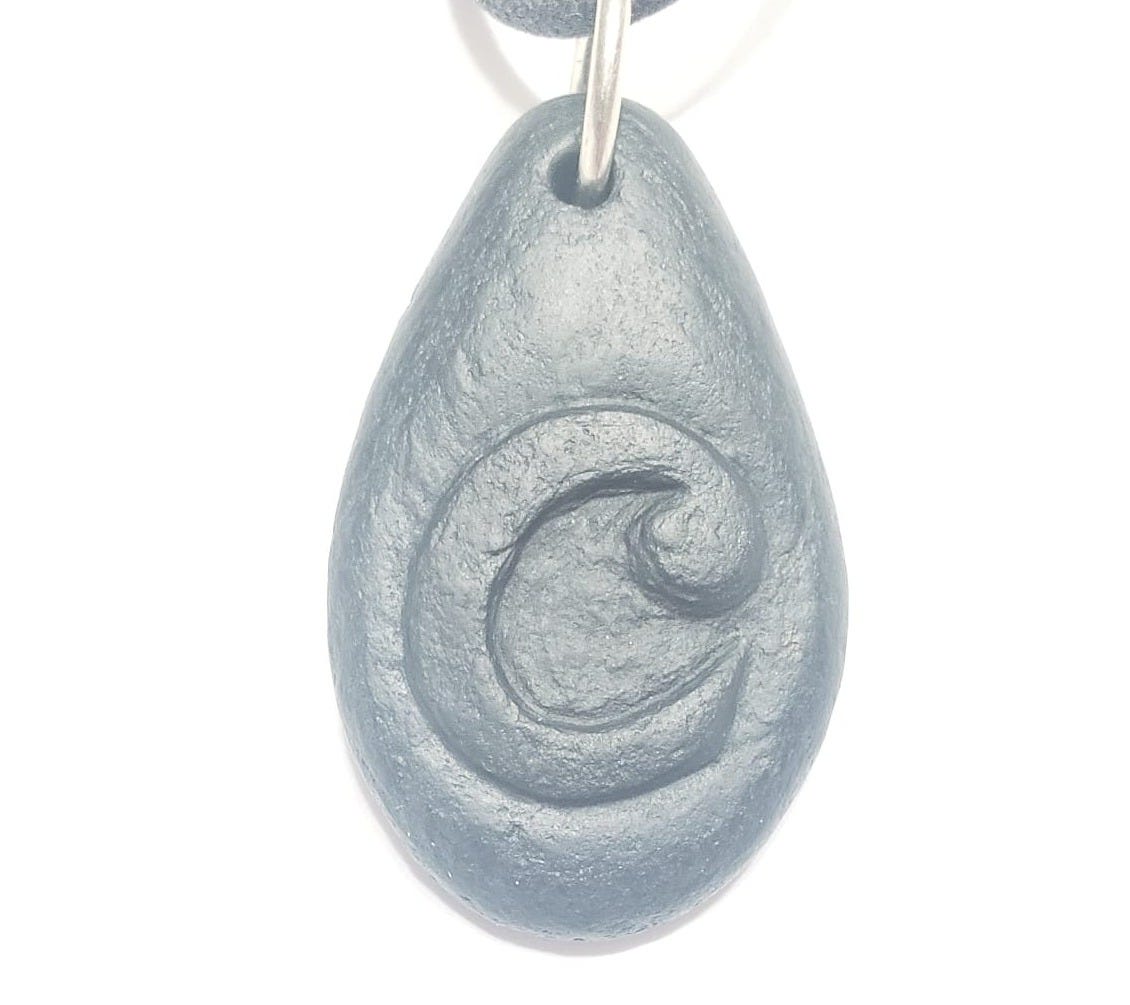
And then one day a priest visited the family carrying five black stones. They were small and shaped like teardrops, the kind you might find along the shore near one of the volcanoes in southern Chile.
Each stone had a single letter on the front, and they soon figured out there was one for each of the four sons, and one for Isabel.
Cristian stared at the deep, sculptural C carved into the stone:
He then flipped it over and saw, scratched in thin strokes:
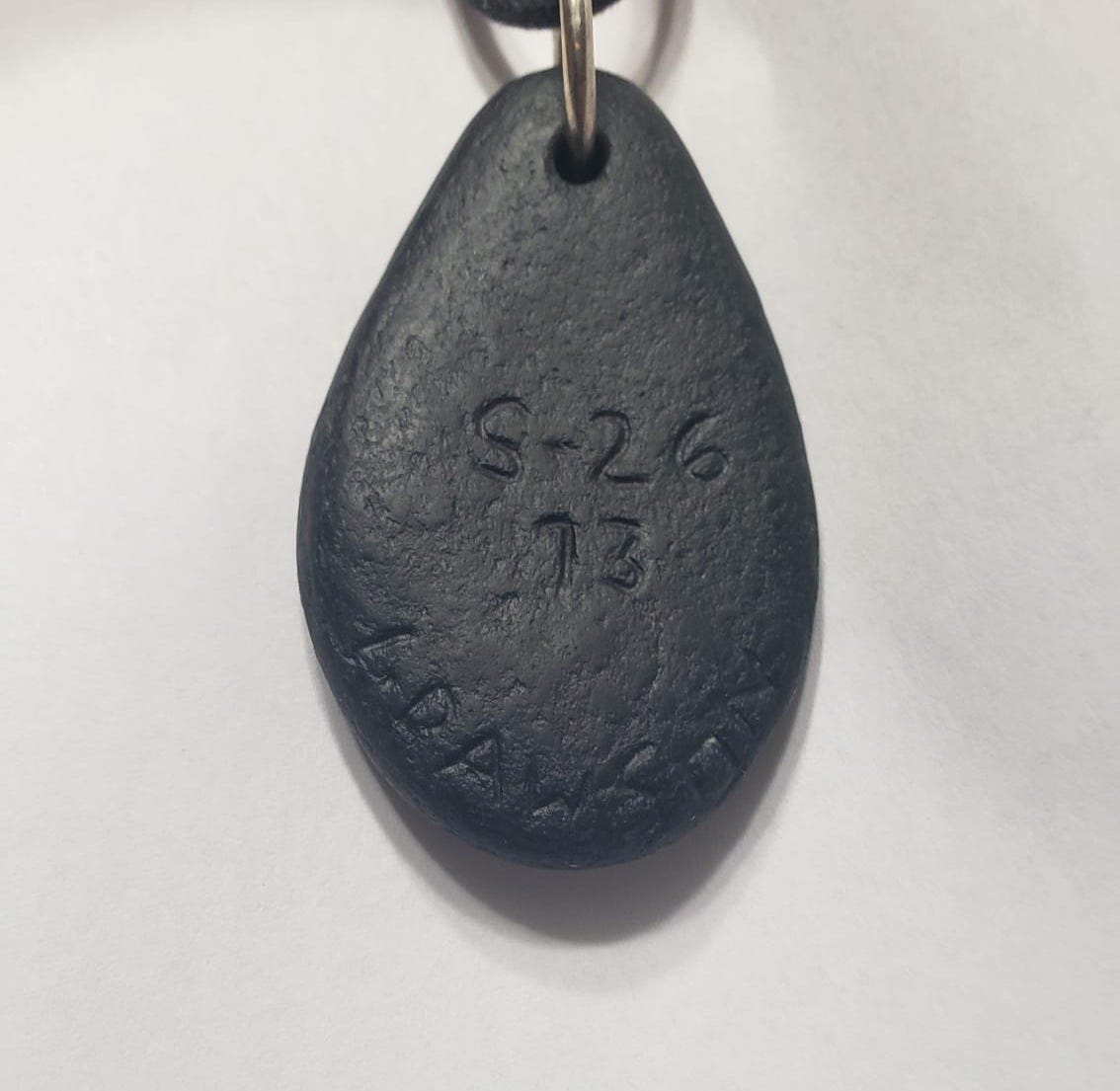
It was sent to him by S-26 in 1973 from Isla Dawson. Dawson was an island on the frozen southern tip of the continent, where political prisoners were known to have been taken. His father had signed the stones, S-26. A prisoner number?
Whatever it meant, their father was alive! And not just alive—he was thinking about each one of them. He had picked up the stone to be carved in some private moment when the armed guards were distracted.
A Catholic priest had smuggled them off the island on a barge. They made their way north for almost fifteen hundred miles to a seventh-floor apartment in Santiago. To his family, those stones were the greatest miracle they’d ever witnessed.
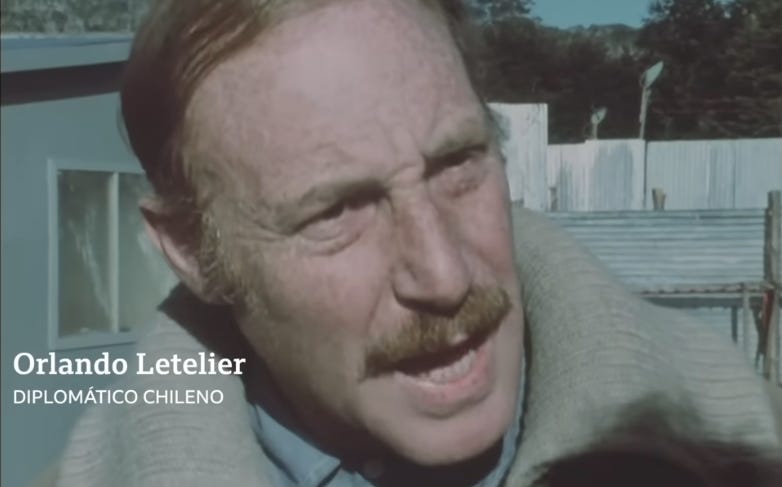
By December, under intense international pressure, the junta loosened the communications ban and Orlando was allowed spotty correspondence with his family. Sometimes letters got through and other times weeks went by with no deliveries.
I found some of those letters on a recent visit to the Archivo Nacional de Chile. Among thousands of documents now considered a national treasure, there’s a letter from Orlando to his four sons for Christmas. He was clearly nostalgic and missed his family and had yet to be charged with a crime, because he had not committed one. Nobody knew if he would ever see them again.
He writes, “Out of a desire to serve this country, I did not only give up many things myself, I made you give them up too.”
Orlando Letelier: “Por un deseo de servir a este país, no sólo renuncié yo a muchas cosas, sino que los hice renunciar a ustedes —”
Orlando goes on to tell his sons that life should be built on the foundation of three things: justice, truth, and love. And that to truly know a man, one must never separate any of those things from him.
Orlando Letelier: Pienso que la vida debe reposar fundamentalmente en tres cosas: la justicia, la verdad y el amor. Para ser verdaderamente hombre, no hay que separarse de ninguna de ellas.
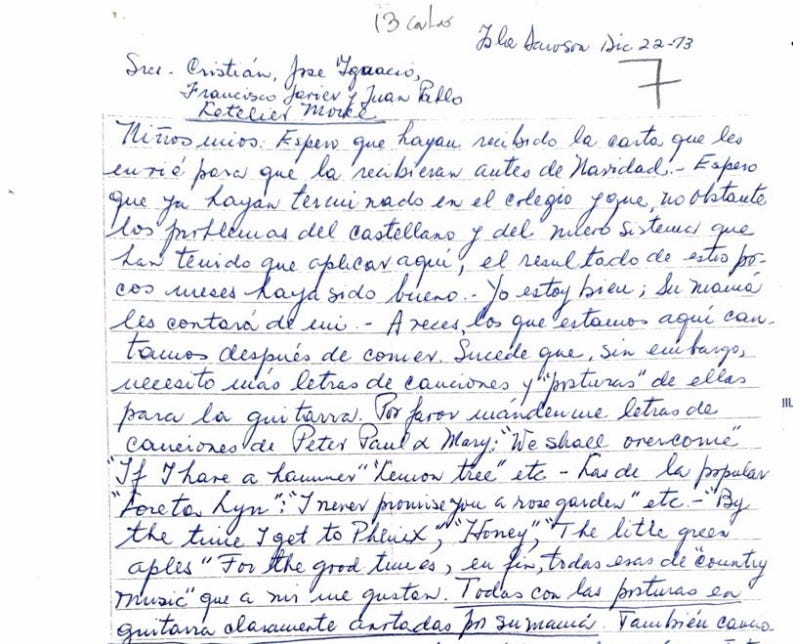
Orlando ends the letter by noting that there is perhaps no better occasion to understand the true meaning of human love than the day that celebrates the birth of the one who lived and died for love of men. And, for that reason, they should show “our Isabel” (their mother) all the happiness they can conjure.
Isabel Letelier traveled as close as she could to Dawson Island. She searched the choppy waters of the Strait of Magellan hoping to catch an impossible glimpse of her husband as she held her carved stone on a necklace. People approached her quietly to offer solidarity, because the stone symbolized what could not be said in Pinochet’s Chile: my husband is an innocent political prisoner—and we are not afraid.
Orlando put on a brave face for his family in those personal letters, because the reality of what he endured in detention was a whole other story.
Post Note: Cristian Letelier shared his story with me because he wants the world to remember who his father was and what was taken from his family fifty years ago on Embassy Row. Walking a mile in his son’s shoes made me realize that there was much more to Orlando Letelier than his assassination. It was indeed a story that deserved to be told.