
How Federal Agents Helped Topple a Dictator Abroad (1)
Despite espionage and cover ups from Chile and the U.S. on the Orlando Letelier assassination on Embassy Row, intrepid prosecutors and the FBI somehow broke the case open anyway and made history.

Author’s Note: What you’re about to read is based on declassified documents released over the past 50 years and the memoir, Labyrinth, by Assistant U.S. Attorney Eugene Propper and Taylor Branch.
On the morning of September 21, 1976, Orlando Letelier was driving down Massachusetts Avenue with two colleagues on their way to work. As they rounded Sheridan Circle, a remote-controlled bomb strapped beneath their Chevy Chevelle detonated just blocks from the White House on Embassy Row. The blast launched the car off the pavement and engulfed it in flames.
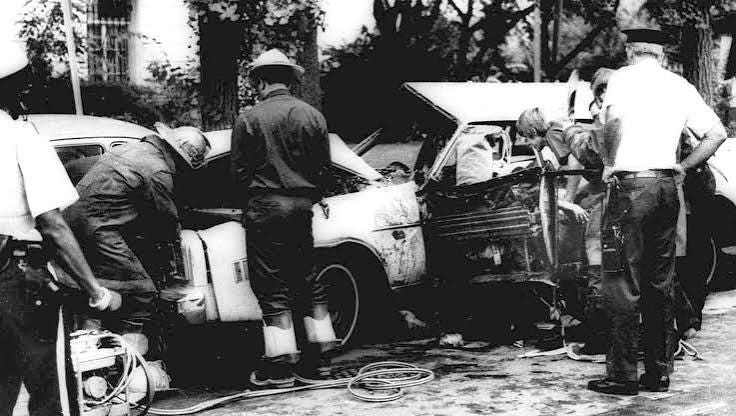
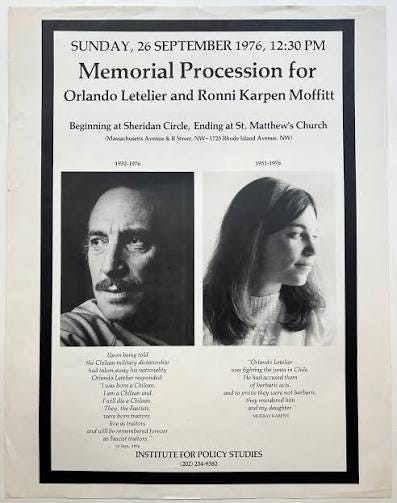
First responders rushed to the smoldering wreck. In the driver’s seat was Orlando Letelier, the former Chilean ambassador to the United States. The blast severed his legs and he bled to death almost instantly. In the passenger seat was his 25-year-old colleague, Ronni Karpen Moffitt, who stumbled onto the sidewalk and collapsed. Her husband, Michael, who had miraculously survived in the backseat, held his dying wife. Referring to the then-dictator in Chile, he shouted: “Assassins! Pinochet!”
While the case might have had international implications, the murders were committed on American soil so the investigation fell to the FBI and federal prosecutors rather than diplomats. The case was assigned to Assistant U.S. Attorneys Eugene Propper and Lawrence Barcella, alongside FBI Special Agent Carter Cornick—none of whom had ever worked on a state-sponsored assassination because there had never been one on American soil.
Since the bomb was placed directly under the driver’s seat, the target was clearly Orlando Letelier. He was a citizen of Chile and a longtime resident of the United States, that had raised his family in Maryland as an executive at the Inter-American Development Bank. In 1971, he had been appointed the ambassador to the United States by then-President Salvador Allende, the first Marxist socialist to be democratically elected in the Americas.
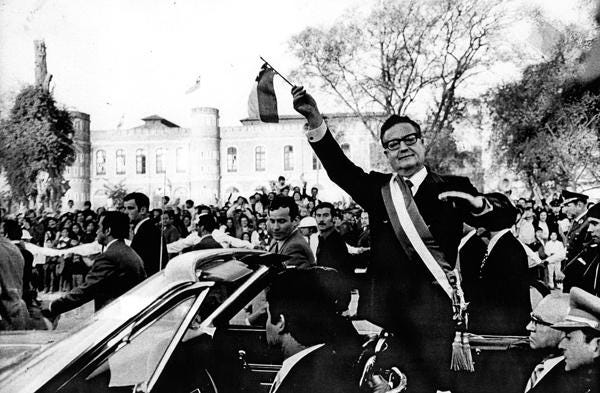
Representing a Marxist government in Cold War Washington made Letelier an instant target of suspicion. President Nixon even sent some of the same “plumbers” of Watergate fame to break into the Chilean embassy to search for incriminating documents. While Nixon and National Security Advisor Henry Kissinger told Orlando the United States wasn’t interfering in Chile, he had good reason to doubt their word.
Letelier could have maintained a comfortable life in Washington as an economist, but he returned to Chile as Foreign Minister with his wife and four sons as the country teetered on the brink of civil war.
On the day of the anticipated military coup that overthrew Allende in 1973, Orlando Letelier was captured, tortured, and placed in a freezing forced-labor camp on Dawson Island in the Strait of Magellan. After a year in captivity, his influential friends and contacts in the United States and Venezuela forced Pinochet to release Letelier into exile. He was warned before he left to keep his mouth shut and never to return to Chile.
Armed with firsthand experience, Letelier lobbied Congress and the UN to isolate the military junta for its crimes against humanity. He became the most influential voice of a global movement determined to return democracy to their homeland. He also convinced the Dutch government to cancel a massive mining investment in Chile.
In response, Pinochet signed a decree revoking Orlando Letelier’s Chilean citizenship. That same night, at a packed benefit concert starring Joan Baez and Pete Seeger at the Felt Forum in Madison Square Garden, Orlando took the stage and defiantly proclaimed, “I was born a Chilean, and I will die a Chilean!”
Eleven days later, Orlando was slain in broad daylight on Embassy Row in a shocking explosion meant to send a message to other exiles.
When the FBI explored the Chile connection, they faced steep resistance in Washington. Pinochet was a stalwart ally in the Cold War. The CIA, then directed by George H. W. Bush, circulated a theory that leftists had killed Letelier to create a martyr. Anything to distract from the fact that the Agency itself had backed the military coup and trained its intelligence agents.
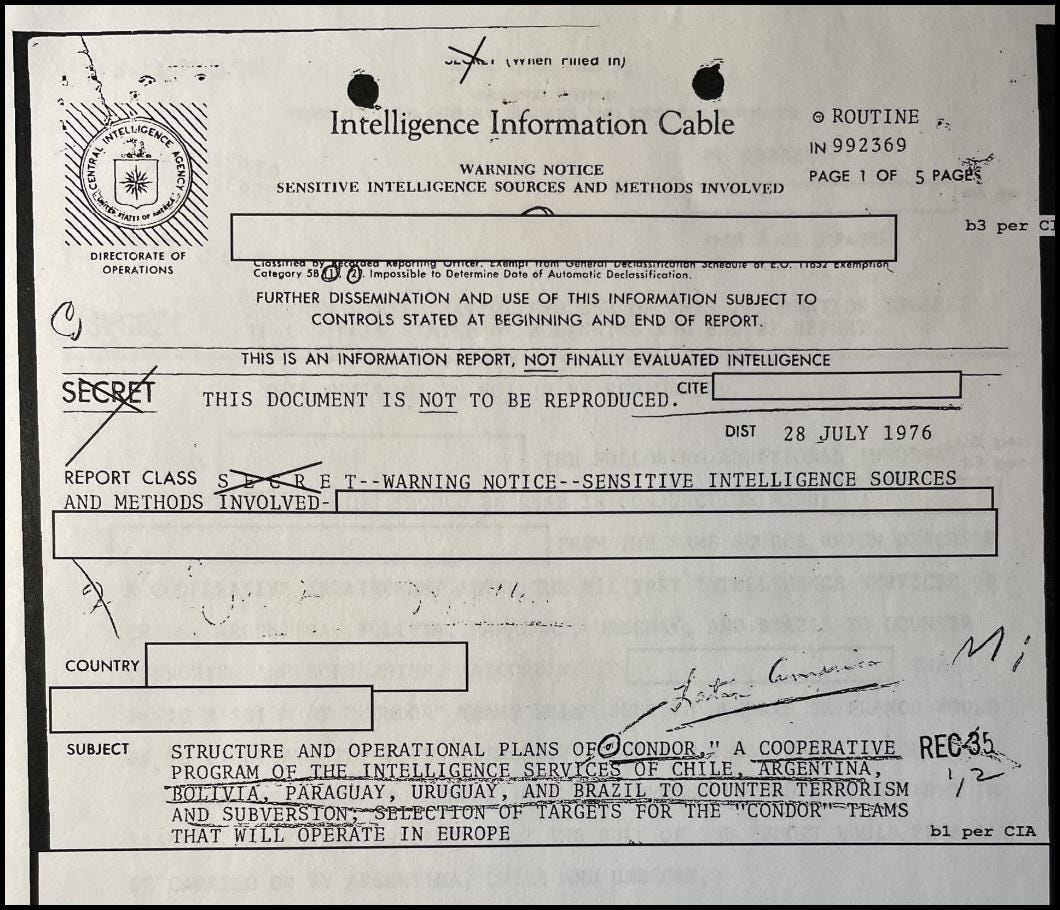
The FBI pursued its own leads, and within days, FBI attaché Robert Scherrer wrote a cable describing Operation Condor, a coordinated intelligence network among South American military dictatorships designed to track and kill political opponents abroad. Chile’s lead agency in the network was DINA, the secret police that reported directly to Generalissimo Pinochet.
DINA agents had also used a car bomb in Buenos Aires to assassinate Pinochet’s predecessor who had remained loyal to the democratic constitution. A year after Prats, they shot a Chilean politician and his wife in Rome. The FBI realized they weren’t just investigating a murder; they were tracking a transnational death squad brazen enough to strike in the capital of a close ally in the Cold War.
In February 1978, the CIA shared two passport pictures with investigators that had been handed to the Agency by the Ambassador to Paraguay, George Landau. He had been suspicious of two Chileans seeking American visas using fake Paraguayan passports, so he sent pictures of them to the CIA two months before the bombing. For whatever reason, the CIA had sat on those passport pictures for almost two years before handing them to investigators.
Those passport pictures were the biggest break in the case yet, but nobody could identify the men. Desperate for leads, Assistant U.S. Attorney Eugene Propper leaked photos of some fake Paraguayan passports that were believed to be related to the case.
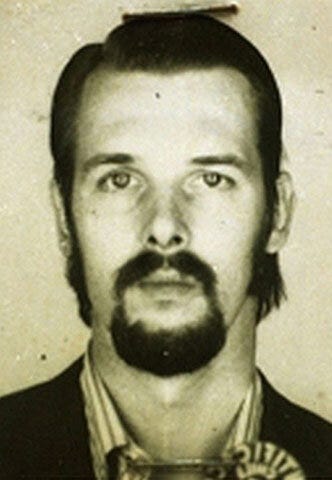
A Marine guard who had previously been stationed at the American Embassy in Chile identified one of the men from the photos: an American expat named Michael Townley.
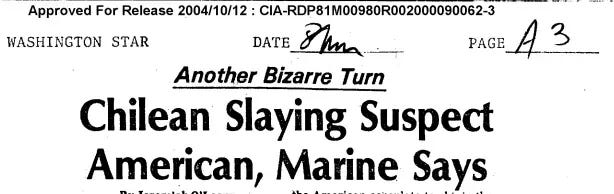
Investigators were shocked: How does a kid born and raised in Iowa end up as an assassin for a foreign dictator?
If it was Michael Townley, he was long gone and under the protection of the military government in Chile. Now came the real challenge: How would they extradite an agent of the Chilean intelligence agency wanted for an assassination that most likely implicated the country’s all-powerful dictator?
To be continued…